
In the wake of the confession by Canadian Pakistani Lashkar-e-Tayiba operative Tahawwur Hussain Rana, the Bhartiya Janata party asked the government to not hold any talks with Pakistan.
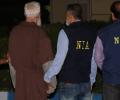
According to the chargesheet, Rana played a crucial role in supporting terrorist David Coleman Headley, a Pakistani-American operative linked to Lashkar-e-Taiba, by facilitating his reconnaissance missions across Mumbai.

Tahawwur Hussain Rana, a key figure in the 2008 Mumbai terror attacks, has been extradited from the US to India and produced before a Delhi court. Rana, a close associate of David Coleman Headley, was brought to India after the US Supreme Court dismissed his review plea against extradition. The National Investigation Agency (NIA) has sought 20 days of custody to interrogate Rana, citing clinching evidence, including emails. The agency believes that Rana's interrogation is critical to understanding the larger conspiracy behind the attacks and his role in planning them.
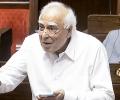
Rajya Sabha MP Kapil Sibal has congratulated both the previous UPA government and the current dispensation for the extradition of Tahawwur Hussain Rana, the mastermind behind the 2008 Mumbai attacks. Sibal expressed confidence that the extradition will shed light on the involvement of individuals within Pakistan's establishment in the attacks. Rana is being questioned by the National Investigation Agency (NIA) to uncover the full extent of the conspiracy behind the deadly 2008 terror strikes. Sibal highlighted the efforts of the UPA government in establishing the NIA and pursuing Rana's extradition, and also acknowledged the current government's success in bringing him back to India. The interrogation is expected to focus on Rana's potential ties to the Lashkar-e-Taiba (LeT) and his role in the Mumbai attacks.

The central government has appointed advocate Narender Mann as special public prosecutor to conduct trials and other matters related to the National Investigation Agency case RC-04/2009/NIA/DLI against Tahawwur Hussain Rana and David Coleman Headley, who is in a US prison following a plea deal.

Tahawwur Hussain Rana, a Canadian national convicted in the United States for his role in the 2008 Mumbai terror attacks, has been extradited to India. Rana, a close associate of Pakistani-American terrorist David Coleman Headley, was involved in the conspiracy from 2005 onwards and assisted Headley in obtaining a visa for India. He is the third person to be sent on trial in India for the 26/11 attacks after Ajmal Kasab and Zabiuddin Ansari alias Abu Jundal. Rana's extradition comes after US President Donald Trump approved the request.
Tahawwur Hussain Rana, a Canadian national accused of involvement in the 2008 Mumbai terror attacks, has been extradited to India from the United States. Rana's interrogation is expected to shed light on the role of Pakistani state actors in the attacks, which claimed 166 lives. Indian authorities are particularly interested in his travels across India in the days leading up to the attacks, including visits to Hapur, Agra, Delhi, Kochi, Ahmedabad, and Mumbai. Rana's extradition follows a lengthy legal battle, with the US Supreme Court ultimately denying his application to challenge it. Rana is known to be associated with Pakistani-American terrorist David Coleman Headley, one of the main conspirators of the 26/11 attacks. The investigation into the Mumbai attacks has implicated senior members of terror outfits Lashkar-e-Taiba (LeT) and Harkat-ul Jihadi Islami (HuJI), as well as officials from Pakistan's Inter-Services Intelligence (ISI).

Tahawwur Hussain Rana, a Pakistan-born Canadian national and close associate of David Coleman Headley, is set to be extradited to India from the US. Rana was involved in the planning and execution of the 2008 Mumbai terror attacks, which killed 166 people, including six Americans. He assisted Headley in obtaining a visa for India, established a front company in Mumbai, and helped in reconnaissance of targets in Mumbai and New Delhi. Rana was convicted in the US for providing material support to Lashkar-e-Taiba (LeT) and sentenced to 14 years in prison. His extradition to India will allow authorities to question him about his involvement in the Mumbai attacks and potentially uncover new information about the role of Pakistani state actors.
The National Investigation Agency (NIA) has begun questioning Tahawwur Hussain Rana, the mastermind behind the 2008 Mumbai terror attacks, to uncover the larger conspiracy behind the deadly strikes. Rana, who was extradited from the US, is being held at the NIA headquarters in New Delhi. The interrogation is focused on his possible connection with the Lashkar-e-Taiba (LeT) and his suspected links with the Pakistani spy agency Inter-Services Intelligence (ISI).
The trial of Pakistani-Canadian Lashkar-e-Tayiba operative Tahawwur Rana, co-accused with David Headley in the 26/11 case, is set to begin in Chicago on May 16. If insiders are to be believed, Rana is likely to implicate Pakistan's Inter-Services Intelligence in the Mumbai terror attacks, reports Vicky Nanjappa.
Giving his testimony on the second day of the trial of 26/11 co-accused Tawahhur Rana, a Canadian of Pakistani origin, Headley, a Pakistani-American, talked about the hatred against Shiv Sena among his Pakistani handlers. 166 people were killed in the November 2008 attack in Mumbai.
The government has given its sanction to charge sheet nine people including Pakistani-American terrorist David Headley, Lashkar-e-Tayiba founder Hafiz Saeed and two Inter Services Intelligence officers for plotting terror attacks in India including the 26/11 strikes.
Security expert B Raman deciphers the FBI affidavit against Tahawwur Hussain Rana, the Pakistan-origin Canadian arrested with David Headley for alleged Lashkar connections, and speculates who could be their handlers in Pakistan.

Headley also said that LeT boss Hafiz Saeed, the mastermind behind the November 2008 attack that killed 166 persons, motivated him for carrying out a 'jihad'. Saeed told him that the satisfaction of one second of 'jihad' is equal to "100 years of worship."
However, Rana's lawyer Patrick Blegen has said in a new motion filed in a Chicago court that as a result of FBI raids on Rana's businesses and his detention, his businesses have effectively been shut down and are worth nowhere near what they were previously estimated. According to court filings, Rana allegedly conspired to bring foreigners to the US under false pretences.
The bail plea of Tahawwur Hussein Rana, who faces possible life sentence for involvement in the 26/11 Mumbai attacks, has been opposed by federal prosecutors in a Chicago court, which asked the Pakistani-Canadian Lashkar-e-Tayiba operative to respond to this by January 20.
Apparently gloating over the mayhem the Pakistani attackers were creating in Mumbai, Tahawwur Rana, a co-accused had proposed that nine of the ten Lashkar-e-Tayiba militants who carried out the carnage should be decorated with Pakistan's highest military award, Nishan-e-Haider.
Two years after his role in terror activities surfaced, the National Investigation Agency on Saturday chargesheeted Lashkar-e-Tayiba operative David Headley, Lashkar founder Hafiz Saeed and two Inter-Services Intelligence officers for plotting terror attacks in India including the 26/11 strikes.
The verdict of a United States court holding Pakistani-Canadian Tahawwur Rana not guilty of the Mumbai terror attacks would not affect the legal proceedings against terrorist Ajmal Kasab and the charge against Lashkar-e-Tayiba of masterminded the strikes, special public prosecutor Ujjwal Nikam said on Friday.
Tahawwur Rana, an accomplice of convicted terrorist David Headley, was on Thursday sentenced to 14 years in jail followed by five years of supervised release by a United States court for providing material support to Pakistan-based Lashkar-e-Tayiba and for backing a plot to strike a Danish newspaper.

Tahawwur Rana, an accomplice of convicted terrorist David Headley, faces up to 30 years in prison during his sentencing in a United States court on for providing material support to the Pakistan-based Lashkar-e-Tayiba involved in Mumbai attacks as well as for backing a plot to strike a Danish newspaper.

Faiza Outalha, an estranged wife of American-born Lashkar e Tayiba terrorist David Headley, has replied to all questions of the National Investigation Agency relating to her knowledge of the conspiracy behind the 26/11 Mumbai attacks.
Pakistan's spy agency Inter Services Intelligence helped terror group Lashkar-e-Tayiba to execute the Mumbai terror attacks, David Coleman Headley, a key 26/11 accused who pleaded guilty to laying the groundwork for the 2008 strikes, told a court in Chicago on Monday.
The trial of Pakistani-Canadian Tahawwur Hussain Rana who is accused with David Coleman Headley for the 2008 Mumbai terror attacks began in Chicago on Tuesday.
India has approached the United States seeking access to Tahawwur Hussain Rana, the Pakistani Canadian accused in the Mumbai terror attack case, and a reply in this regard is expected next month.
In a six-page motion filed in the US District Court, Northern District of Illinois, his lawyer Patrick Blegen sought "particulars" regarding the charge in the indictment that says Rana, a Chicago-based businessman, conspired to provide material support to terrorism in India and Denmark.

'As Rana is not an Indian citizen, our leverage on the US system -- whether it's their judiciary or the executive -- is very limited in that sense.'
Terror suspect Tahawwur Hussain Rana, under investigation for possible links to 26/11, has categorically denied any involvement in the Mumbai attacks, his lawyer said on Monday and asserted that the Pakistani-Canadian "harbours no ill-will" against Indians.
The lawyer of Pakistani-Canadian Tahawwur Rana, co-accused with Lashkar-e-Tayiba operative David Headley in the 26/11 Mumbai attacks, on Monday informed a federal court in Chicago that he was preparing for his client's February trial.
The much hyped-up trial of Pakistani-Canadian 26/11 terror accused Tahawwur Rana has finally come to a close in the United States and one could say with confidence it did not end the way in which many, especially in India, would have expected it to be.
The sentencing of Lashkar-e-Tayiba operative David Coleman Headley is expected to happen only by early next year, after the trial of co-accused Pakistani-Canadian Tahawwur Hussain Rana is complete, Headley's lawyer said in Chicago.
Pakistani-Canadian Tahawwur Hussain Rana was on Thursday acquitted by a US court on charges of abetting Mumbai terror attacks but was convicted for providing material support to the Lashkar-e-Tayiba and helping a terror plot in Denmark.
Tahawwur Hussain Rana, Mumbai attacks co-accused, had an ambitious plan to enter Bollywood by launching Rahul Bhatt, son of film director Mahesh Bhatt, in a movie that he wanted to make.
The trial of Pakistani-Canadian Tahawwur Hussain Rana, which began in Chicago on May 17, has witnessed its share of explosive revelations by prime witness David Coleman Headley.Both Rana and Headley are allegedly operatives of the Lashkar-e-Tayiba and had planned the terror strike in Mumbai along with the leaders of the terror outfit.Rana, a 50-year-old Chicago businessman, has been charged with planning the attacks, providing material support to the LeT.
Watching the 2008 Mumbai carnage live from Pakistan, terror outfit Lashkar-e-Tayiba handlers guided the attackers on phone and even asked them to change tactics to challenge the advancing commandos.
India is likely to get access to Tahawwur Hussain Rana, the Pakistani Canadian accused in the Mumbai terror attack case, after completion of his trial in an American court next month.
A Chicago court has given a 60-day deadline to the Federal Bureau of Investigation to complete its investigations and file an indictment into the foiled terror plot in India and Denmark by Pakistan-based Lashkar-e-Tayiba terrorist group.
Attorneys of Pakistani-Canadian Tahawwur Hussain Rana, who was convicted on Thursday by a United States court for providing material support to the Lashkar-e-Tayiba and helping plan a terror plot in Denmark, said they would appeal against the verdict as there was an error in the trial. Rana's attorney Patrick Blegan said he would file post-trial motions, claiming there was not enough evidence to convict him and there was an error in the trial.
A US court again turned down the bail plea of terror suspect Tahawwur Rana, accused of plotting terror attacks in India at the behest of the Lashkar-e-Tayiba, on Thursday saying the Pakistani-Canadian is charged with "very serious crimes" which give him a motive to flee.
 © 2026 Rediff.com - Advertise with us - Disclaimer - Privacy Policy - Sitemap - Feedback - About us - Terms of use - Grievances